


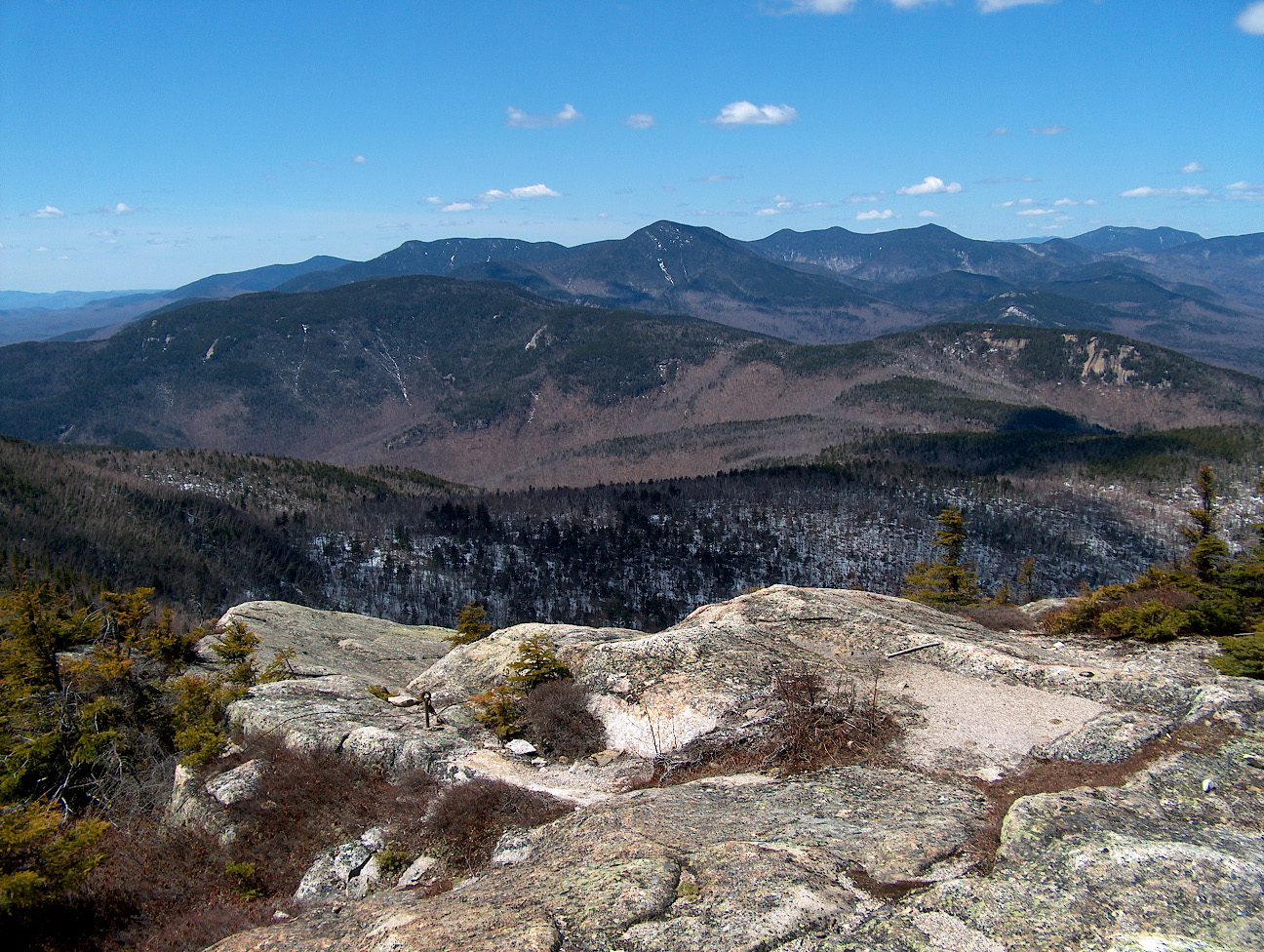
Roughly 235,000 acres are protected by the rule in the White Mountain National Forest, and roughly 80,000 acres are protected by it in Vermont.
By Nate Weitzer
During the 19th century, a popular phrase circulated among businessmen looking to exploit natural landscapes for profit. “Not a cent for scenery.”
In the Northeast, that philosophy led to unsustainable and irresponsible clear-cutting to harvest timber in some pristine mountain areas. By 1911, public outcry led to the passage of the Weeks Act and the formation of the U.S. National Forests to protect those lands, and in 1964 the Wilderness Act authorized Congress to protect more lands.
Then came the 2001 Roadless Area Conservation Rule to further protect wilderness areas from harmful human activity, a process that eventually gained bipartisan support after being proposed by the Clinton Administration and modified by the George W. Bush Administration.
Now the Trump Administration has directed the United States Department of Agriculture to rescind the Roadless Rule, returning decision-making to local forest services, while opening the door to the return of unsustainable practices on public lands that in many cases serve as the bedrock for healthy environments across the country.

According to one analysis, roughly 99 percent of public comments have so far opposed this change, and the USDA has extended the public comment period to October 6.
The rescission targets nearly 45 million acres of forest and grassland (view map here), down from the original 60 million acres of protected lands, because Colorado and Idaho established state-specific rules that would remain in place.
Implications of the rescission could vary widely in different regions, with Alaska’s Tongass National Forest comprising nine million of those acres. That will be the main battleground for legal action with indigenous tribes already battling the administration’s plans to “Unleash Alaska’s Extraordinary Resource Potential” via an Executive Order that could devastate old growth forest and ecosystems in the interest of oil and gas mining.
But what would rescission of the 2001 Roadless Rule mean for public lands in the Northeast?
“Anytime you lose a baseline protection for lands like these forested areas, you’re inviting more risk for enhanced exploiting activities,” said Appalachian Mountain Club Senior Directory of Policy Mandy Werner. The AMC stewards about 235,000 acres that fall under Roadless Rule protection.

“These acres not only provide recreation opportunities, but also critical water and services for their regions,” said Werner. “Forests provide clean water for nearly 150 million people in the U.S. per Forest Service data. We want to hold our breath and hope for the best, because there’s a reason these protections were established in the first place.”
Statements from the USDA recognize both opportunities and risks in the rescission. Arguments in favor include road expansion to fight wildfires and protect watersheds, yet some studies have found that increasing roads could lead to more fires. The statement references 24.5 million acres of Wildland Urban Interface where public lands abut residential areas, and the need to expand roads in those areas for firefighters.
“The proposed change doesn’t trigger immediate actions,” the USDA statement says, adding that roadless areas would still be managed on a 10-15 year basis by local forest services. Yet a lack of faith in this administration’s environmental practices has left the public concerned. Just glancing through some of the executive orders implemented earlier this year—such as “Unleashing Prosperity Through Deregulation”—casts light on long-term plans to exploit public lands.
While the Adirondacks are protected as a New York state park, the White Mountain National Forest contains about 235,000 acres of land protected by the Roadless Rule. In Vermont, the Green Mountain National Forest contains roughly 80,000 acres protected by the rule.
Matt Leahy, Public Policy Manager at Society for the Protection of New Hampshire Forests, acknowledged the decision to rescind the rule doesn’t make sense for environmental protection. However, he expressed skepticism that the wilderness areas of the Whites would be immediately impacted by the changes due to the rugged nature of the acres in question.
“The level of public concern about the administration’s commitment to natural resource protection is understandably justified, but on this specific issue it should be tempered by the reality of how much management work the Forest Service can actually undertake in the White Mountain National Forest,” said Leahy.

Since 2005, timber harvest in the Whites has been capped at 24 million board feet per year by a management plan. Over the past seven years, harvest has ranged from seven to 13.6 million feet, never approaching the limit, due to the rough terrain and other limitations.
That being said, most wilderness areas in the Northeast could theoretically become the target of exploitation through road expansion without the protections of the 2001 Roadless Rule.
New Hampshire senators Jeanne Shaheen, Maggie Hassan, and representatives Maggie Goodlander and Chris Pappas have also urged Secretary of Agriculture Brooke Rollins to consider the stakes of rescinding the rule and have spearheaded the effort to get the public commenting period extended into October.
Citing the massive reduction in Forest Service staff caused by the administration’s purge of federal employees, Shaheen urged the USDA to consider how difficult it might be to implement control at a local level.
“The Administration’s current effort to repeal the Roadless Rule has all but ignored public comment. Compared to the more than 600 meetings and 1.6 million public comments that shaped the original rule 25 years ago, the Forest Service has ignored our calls to hold public meetings in New Hampshire,” said Shaheen. “Instead of trying to rush a decision without proper input from the people who will be most affected, the Forest Service should be focused on restoring staffing, strengthening research that benefits our rural economies and protecting the places that Granite Staters treasure.”
Would the categorical rescission of wilderness protections allow for a return to the exploitation of scenery and vital ecosystems for profit? Given this administration’s track record, it certainly seems possible. And over a million Americans have made it known during this comment period that they don’t want to find out.
The deadline for public comments about the proposal to rescind the Roadless Rule is October 6. Learn how to submit a comment here.

Nate Weitzer is an avid trail runner, backcountry skier, and mountain climber living in North Woodstock, New Hampshire, where he writes for multiple publications. Over the past 20 years he’s thru-hiked the Appalachian Trail, a portion of the Pacific Crest Trail, climbed Mt. Rainier, Adams, Baker, Hood, and skied off multiple volcanoes. Weitzer has summitted the NH 48 in all four seasons, finished the ADK 46er list while working trail maintenance in the Keene Valley area, and completed the Colorado 14ers over the course of four summers. He’s written about the inaugural White Mountains 100 and ultrarunner Lexi Jackson for Northeast Explorer.